“You know how I know you’re gay? Cuz’ you listen to Coldplay.”
And with that one cinematic phrase, The 40-Year Old Virgin made Coldplay a punchline. That was three years after the release of the band’s second disc A Rush of Blood to the Head and the same year that the band released X & Y, which went on to garner decent reviews.Well, if loving this album makes me of the homosexual persuasion, then color me queer. Besides, Coldplay seems to be gaining steam and popularity as each year passes.
A Rush of Blood to the Head is the album where Chris Martin and his fellow band mates began to not only get it right, but to create heart-wrenching and ethereal pop music bliss. From the album’s opening tempo revving “Politik” to the summation of “Amsterdam,” Coldplay offers songs that almost appear as anthem amidst slow heartfelt ballads, such as the near perfect modern romantic classic “The Scientist.” I remember a point in my life where I listened to this song religiously, belting out the codas and choruses with a fervor even emo kids would envy with suicidal urges. If you have any choice words to offer to this admission, see the previously written note at the beginning of this tangent… you know the one where I say I would gladly admit to my liking of this album.
Honestly, there’s no point going into each one of these tracks, because I appreciate each one of them a great deal. I’m not even a Coldplay fanatic, but I believe this album borders upon greatness. I would even halfheartedly argue that it should warrant a higher position on this or any other best-of lists. It is ridiculous how a simple drum beat, some decent guitar work, a piano, and Chris Martin could make something so worthy of admiration, but they have and it has aged well. Martin possesses the rare talent to croon in a seemingly depressed falsetto without falling prey to an emotional stigma. For instance, the lyrics and feeling may be similar, but Coldplay never strays into genres made popular by say Echo & the Bunnymen (my thoughts to come soon).
Great album from start to finish. Let’s hear the negative my music critiquing confidant can muster up with this one. I dare you to find something wrong, Michael.
-d.
I’m pretty torn on this one. I’ve never been that impressed with Coldplay. They’ve always been solid, but they strike me as a second rate Keane. They are regularly compared to Radiohead, which is a complete crock. The have nowhere near the creativity of Thom Yorke, although they are better at finding their way around a hook. I see them more as a follow up to Blur, with the echo laden piano and quintessential British rainy day ballads. But they really don’t live up to the expectations of being the stylistic offspring of one of the best bands of the nineties.
But the point here is to judge this particular album. Not their worst, but far from the artistic high point they would reach with Viva La Vida, the main problem is repetition. Every song features the same plodding piano downbeats, the same guitar rhythms. You can hear glimpses of a decent group of musicians. "In My Place" is a great example of how well they can build layers, where you can almost hear how the song was laid out piece by piece. But the next few songs all sound the same, which means exactly like all the songs on their first album, Parachutes.
"Clocks." This was supposed to be the song that really showed how awesome they truly are. I had so many people play me "Clocks" while explaining how I just had to love it once I heard it again. Nope, still can’t stand this waste of recording time. Nonsense lyrics, unimaginative bass and guitar parts, and those three damned piano keys being pressed repeatedly for over half the song. I want to travel the world, breaking those strings on every piano Chris Martin might ever come into contact with. Can’t be too careful. I will hear them in my nightmares tonight. doo doo doo doo doo doo doo doo doo.
"Daylight" helps me out of the rut, even if it’s just to throw me violently into another. A really nice bassline gets me excited until I realize that the same four beats of music will be repeating for the next three minutes. "Green Eyes" gives me a headache for the first half. Seriously, guys, you don’t have to strum the guitar to the exact same rhythm the entire time. Mix it up a little, throw that accent on the upbeat once in awhile, show some fricking energy. But the strangely country feel once the band comes in is actually pretty nice.
The rest of the album is, despite of (or maybe because of) a lack of hits, increasingly interesting. "A Whisper" is the most original thing on here. No more sound-alike pop on this one. A grating guitar, some big drums, and holy crap the bass player is actually playing something other than the root note! We finally get a little aggression and energy out of these guys. Sounding even more like Keane is, in this case, a good thing. We even get bridges that deviate from the chord progression. Joy! "A Rush of Blood To The Head" and "Amsterdam" lower the feel back into typical mellow pop, but with some nice wordplay and much more interesting progression.
The album ends with " Politik," probably the most interesting thing I’ve heard in the last hour. The song constantly evolves, changing styles and direction at will, without feeling spliced together. It’s hard to explain what happens, so it’s best to give it a listen, but pay attention and you’ll realize that "Politik" never seems to repeat itself. A feat for anyone, but downright shocking after the first half of this cd. All in all, it’s a solid effort, and I don’t hate it, but that’s the best I can say. There is so much better music out there, and that isn’t Coldplay’s fault, but it is to their detriment that even with the great production work Ken Nelson put forth they couldn’t do any better.
Check out Alicia Keys making "Clocks" much more listenable. Or this hippie making it all….hippie.
I should preface this critique with this statement: "I love Otis Redding!" I remember hearing him when I was a sophomore in high school somewhere around the year 2000 and being blown away. This is significant in that I was probably the only 16 year old kid in 2000 listening to Otis. I can remember getting the Otis Redding Anthology set for Christmas and singing along to "Tramp," "Love Man," "I've Been Loving You Too Long," "Sittin' on the Dock of the Bay," and "Try a Little Tenderness." Most of my friends never caught on, but I believe that if they had just expanded their horizons beyond whatever Staind or Eminem album that was being released at the time, they would have been pleasantly surprised and learned to appreciate some of the best soulful serenades ever created in music. The great thing about Otis is that he sang with nothing short of every ounce of his being. His performances are full of raw emotion and heart. You believe he knows what he is singing about and it never feels force. You can be sure of at least one thing when you put on a Redding record, he was never faking it. This is the problem with the current state of R & B. Everyone comes out with a song about panties dropping (Trey Songz) or throwing up deuces to the women they beat (Chris Brown). They put a drum beat to it and get some rapper to spit a verse and it sells, but it lacks all the emotion and raw appeal of Otis Redding and the likes of him. Otis, Sam Cooke, Lenny Williams, etc. sang about all these same things, but never explicitly. These aspects are what makes the old soul greats in fact great.
That being said, I was fairly disappointed by this album and it has nothing to do with the lack of what I have mentioned above. Otis is doing everything right as he always did. Instead, my dissatisfaction stems from the fact that the production value of this live album is severely lacking. In turn, at times, the listener is unable to decipher or hear what made Otis so great; his emotion. No doubt that the performance was magnificent, seeing as how you have the man backed by the legendary Booker T. & the MG's. I understand that the album's release was during a time where live production is not what it is today, but it is ridiculous how bad it is, at times, throughout this album. He has wonderful renditions of now classics, "Day Tripper" and "I Can't Get No Satisfaction." His personal classics are equally phenomenal. Unfortunately, you can't hear his voice at times and that is a definite problem. Nonetheless, you can witness the rabid nature of Otis' followers by their shouts and pleads despite the lacking audio aspects of the disc. For example, during two breaks in between numbers you can hear one female pleading with the artist to sing a certain song. Over and over. Pleading so much that it's almost disconcerting to listen to, but this is what Otis did to people. That is why he is unique and greatly missed even after all these years. He sweated soul. He cried R & B. If only we could hear how fantastically he did all these things in a live setting. Regardless, I have my anthology and that provides me with the Otis I know and love.
God damn I’ve been looking forward to this one. Otis Redding, arguably the greatest voice in R&B history, backed by Booker T. and the M.G.’s, one of the best groups of musicians ever assembled. I’ve always been a fan of just about everything Stax released during the mid 60’s, and this was recorded on a package tour of Stax/Volt artists. I would give anything to find a video of the entire show.
First off, let’s touch on the band. You could remove the vocals and I’d still be ecstatic listening to the songs on this album. Duck Dunn is one of the most influential bass players for a reason. Steve Cropper is a machine, playing tasteful leads and perfectly tight scratch rhythm. I discovered them through the Blues Brothers, where they carried the greatest super group around. I spent a significant portion of my teens and twenties emulating Dunn. Here you find them sounding cleaner live than most artists can pull off in the studio. I challenge anyone to find a single bad note. Insane. This is what all musicians should strive for.
Otis. The man is deserving of every bit of praise ever sent his way. A little history on this recording: As I already mentioned, this was taken from a package tour of Europe, specifically Paris, in March of 67. Redding and all but two members of his band, the Bar-Kays, were killed in a plane crash that December. A mix of classic originals like "Respect" and "Fa-Fa-Fa-Fa-Fa (Sad Song)" with some random covers, "Day Tripper" and "(I Can’t Get No) Satisfaction," find Otis at his frenetic best. The amount of energy pouring off every note is just fantastic.
There’s really no point in reviewing particular tracks. Each is perfect. Great arrangements on the covers, hot horn section, surprisingly balanced recording considering what most live albums from the era sound like. You can drop the needle anywhere you want and not be disappointed. My only complaint is how nearly every number is faded out. I’d love to hear how the band actually wrapped up the songs and if there were any extended solos. Also, I would have liked to hear some of the audience reaction. But that’s not always easy to balance, even now, so I didn’t expect it.
The one possible downfall to all my praise is that it was common practice for live albums to be heavily over-dubbed in the studio, a practice that continued through the mid 70’s (and is still done to a lesser extent today). From what I’ve read, that wasn’t the case with Live In Europe. Still, the possibility does put a slight damper on the praise I’ve been heaping on the band. Regardless, nothing can be taken away from this album. Deserving of a much higher placement on the list, Otis Redding should have a spot in every music fans collection.
The only cover worthy of the man himself, the queen…
So, it’s been said in numerous sources (including Springsteen’s book Songs) that Bruce could never begin to top the success of Born in the U.S.A., so that he was not going to attempt it. Instead, he decided to strip the music down and compose a more personal, heartfelt album. The crazy thing about this idea is that this is an incredibly difficult feat in itself. Mostly due to the fact that most people would want to push further into that which made them successful, but also, on the flip side to that argument, many bands have been chastised for leaving that which makes them great. There are two outcomes when choosing this path: it could destroy your career or it can add to your greatness (given that the new thing attempted is heralded by fans and critics alike). Admittedly, most fans were probably expecting another Born in the U.S.A., but thankfully The Boss decided to create Tunnel of Love.
An album of deeply constructed songs about relationships, but more importantly the tolls these relationships take on a person. The expectations that come along with relationships and the vulnerability they require. Although Springsteen denies the autobiographical nature of many of the songs included on the album, it is difficult not to diagnose the lyrics contained within this album as descriptions of his marriage with actress Julianne Phillips. The difficulty of maintaining a relationship can be seen throughout songs such as “Brilliant Disguise,” “Cautious Man,” and “Tunnel of Love.” Of course, there are the stock and standard Springsteen characters all over the album, as well, in songs such as “Spare Parts.”
The album begins with my least favorite song, “Ain’t Got You.” We’ve all heard this one before. Money doesn’t buy happiness…yadda yadda yadda. The song is stomachable and even a bit catchy, but it does nothing for me. The next song, though, kicks off what becomes a major theme within the album. “Tougher Than the Rest” tells the story of a man who will never be a “handsome Dan” or “sweet-talkin’ Romeo” and his affection towards a girl who may have been around the block a few times. The main character in the song doesn’t mind this fact appealing that he is tougher than all those other guys who may not accept the girl for who she may have been in the past. This is partly due to the fact that he may have been around, as well, but more so the man’s tough skin. “All that Heaven Will Allow” focuses on the courting of a girl and the excitement that follows. I’m fairly certain that Springsteen was also singing about getting into a girl’s pants, again. “Spare Parts” starts off with one of the weirdest first lines I’ve heard in a song; “Bobby said he’d pull out, Bobby stayed in, Janey had a baby, it wasn’t any sin.” And so begins a song about the hardships of reality and growing up. Bobby leaves Janey with a baby and life changes for the young girl. Eventually, she pulls herself back together and by the end of the song show a certain amount of promise. “Cautious Man” provides the listener with Bill Horton; a man with the words “love” and “fear” tattooed on his hands. This imagery as well as the title of the song tells the listener everything he/she needs to know about this song. It is deeply rooted in the fear that comes with loving another human being and the vulnerability this ultimately requires. It is a theme that continues with “Walk Like a Man” and “Tunnel of Love.” I personally love the picture that the title track paints for the listener while comparing the rollercoaster of a relationship to an amusement park ride. I love to sing along to this song, especially the first few lines describing the fat man accepting tickets to the ride whose eyes “take a walk” all over the narrator’s girl. “Two Faces” and “Brilliant Disguise” pull together the remnants of the album’s themes. “Brilliant Disguise” while being an extremely popular song does more to explain the hesitancies and inconsistencies of a relationship than most things I’ve heard or read in my life. It’s a hauntingly beautiful song. “When You’re Alone” follows up with a tale of two people going their separate ways and the alienation that such a parting provides. The album ends with “Valentine’s Day,” providing a fitting close to an album chockfull of heartbreak, fear, and uncertainty.
The Boss does everything right on this album. I listen to this album over and over and with each listen I believe it gets better. Even the video for “Brilliant Disguise” is thoroughly admirable in its’ simplicity; something Springsteen has mastered far better than most of his contemporaries.
-d.
I hate Bruce Springsteen. I know, I know. But I have to come clean. I find him stiff and derivative, a man clinging to his influences. Granted, he does a good job of imitating the better qualities of his heroes. Nonetheless, I get tired if listening to impressions, and this album is full of them. Elvis, Van Morrison, Bob Dylan, Pete Seeger…. they’re all here. Not hidden in the least, each song could be a cover, such is the extent of the infringement. I respect the deep emotion and intensely personal lyrics and can’t fault the man for the content in that respect. It’s just too bad these beautiful and heartbreaking stories couldn’t have been told with some musical originality.
With all that out of the way…. This is the second most depressing album yet. Only Richard Thompson tops Tunnel Of Love for sheer morbidity and torment. As an emotional masochist I have to admit that earns Bruce some points in my book. At the same time, the trappings of 80’s pop music take some of the edge away. It’s hard to really feel the despondency of a slow country blues about the end of a relationship when in the midst of a finger picking guitar refrain you get blindsided by a huge blast of Korg synthesizer. I love the big Phil Collins drum echo, but it really has no place in a Guthrie-esque folk turn. And why….why the random overdriven guitar solo in the middle of "Two Faces?" If you’re going to harmonize fuzz guitar like that, just get Brian May and do it right.
There are some really nice moments here. "Valentine’s Day" is hazy reflection of Gordon Lightfoot. The quiet mandolin underplays the keys, and the simple breezy bassline plays off the root just enough to keep the listener tuned in. My favorite song here by a mile. The first half of the album is all solid, but also sees Bruce aping at his worst. Still, I prefer these songs ("Tougher Than the Rest" and "Spare Parts") over the latter half’s typical 80’s Springsteen pop. So often the last 5 songs or so (leaving out "Valentine’s") run together in an imperceptible mess of Xerox copy singer-songwriter junk. Like so many similar artist from the time, he may be an expert with words, but he shoves them all into the same basic mold. Over time, it just wears more and more on me until I give up and put on an artist with some energy. It’s amazing how often Springsteen leads me to the Dead Kennedy’s.
While we’re on an artist that let his emulation of his heroes become an obsessive quest to be them, here’s the female equivalent; Patti Smith, with her brilliant version of Bruce’s unreleased "Because The Night."
The Paul Butterfield Blues Band’s self-titled album came out in 1965. Today it strikes a person as just one more blues album, but given the racial tension of the 60’s the album’s mixture of ethnicities is staggering. Aside from being a jumpin’ album highlighting the guitar genius of Michael Bloomfield and Elvis Bishop, the album was able to take a genre of music primarily associated with black culture and introduce it to white surburbanites. Perhaps, what is most impressive, aside from the fact that Butterfield was one of the first white lead singer’s in African-American dominated blues, is that half of the group were underage city kids.
Paul Butterfield, the wealthy son of a Chicago lawyer, and college classmate Elvis Bishop began the early blueprint of what would become The Paul Butterfield Blues Band in the early 60’s, but it wasn’t until the two were introduced to Jerome Arnold and Sam Lay while mixing it up with such blues heroes as Muddy Waters that the band began to take shape. As the story goes, Michael Bloomfield was just a temporary musician playing alongside the band until Elektra Records (out of Cincinnati, OH) producer Paul Rothchild suggested the band hire Bloomfield as a full-time member. The rest is white-boy blues history. The band went on to play the Newport Folk Festival (some members even played alongside Bob Dylan during his famous electric set) in 1965.
The music itself is straightforward electric blues. Listening to it now, one likens it to countless other examples of the blues, but at its’ time the band brought a genre of music that maintained a spot in the American underground to the forefront of the nation’s culture. The album is easily listenable, providing a great road soundtrack, background music while cleaning the house, and of course providing toe-tapping gyrations of the body. If you’re looking to be blown away by a blues album during today’s current musical situation this is probably not the album for you. There are probably countless other blues musicians a person would pass Butterfield over for in the quickly diminishing record store, but I advise at least a listen. Tracks such as “Screamin’” provide the listener with impressive feats of fretwork and the horns of nearly every song are dance inducing numbers. “Our Love is Drifting” reminds me of some sad schmuck drowning his/her sorrows in a neon twilight, as is “Last Night.” My one complaint is that a few of the songs appear to be carbon copies of one another. For instance, “I Got My Mojo Working” and “Mystery Train” seem to have the same construction, but at different tempos.
Overall, I understand the album’s inclusion due to its’ historical significance, but I don’t see this as an album one would consistently put on for a listen. It contains monumental instrumentation, but lacks memorable tracks that stick in your brain. Unless you are a huge blues buff, this album will probably make a few rotations and then fall back into obscurity on your iTunes library. I know that is most likely its’ fate on mine.
This album’s coveris brought to you by this “star-studded” group. Check out the young man on guitar. Incredible.
-d.
The self-titled debut album from The Paul Butterfield Blues Band has proven difficult for me to review. It’s a solid collection with great musicians obliterating some typical blues numbers. The instrumental tracks are exemplary. But something just isn’t catching me. Maybe it’s the twenty-something white guy singing the blues, but I don’t feel much heart and soul in this. The songs are individually great and fun to listen to, but as a record I get lost halfway through. The whole thing keeps falling into the tiny space where I like an album but have no emotional interest in it.
I’ll start with my favorite song. "I Got My Mojo Working" is a great example of the uptempo dancehall style of Chicago blues that you probably know from the chase scenes in The Blues Brothers. Nonstop ride cymbal, chugging bass and guitar accents all come together to give the impression of a fast train, a quality I always enjoy in this type of music. Problem is, like most of the songs, the lyrics are completely forgettable. Even with my other favorite numbers like "Mellow Down Easy" or "Blues With Feeling" the lyrics seem plainly uninspired. It feels like some kid listened to a bunch of blues records and wrote his version of what he heard. Which is exactly what it is, same as early Rolling Stones. But to me that isn’t an excuse. Write about what you know. When you sing songs about a life you can’t really understand it’s going to be a failure every time.
Of course like I often do, I’m being hard on Paul. He was only 23 when this album came out. His musicianship, and that of the friends and session guys he brought together, can’t be besmirched. There’s so much talent on display here it’s shocking, and the extended instrumental sections have to be heard by anone who calls themselves music fans. Specifically the end of "Screamin’." Also," Our Love Is Drifting" is the exception that proves the rule. It’s full of passion. But throughout this album the stereotypical lyrics and, at times, detached delivery keep me from becoming invested in the music.
A double cover! People pretending to be one band while playing the music of another.
On the other side of my previous argument that rap is a genre that struggles to age well over the years is The Fugees' The Score. An album that perfectly blends a multitude of styles and genres, The Score is a testament to great music that takes you back to a time when you were young. Although the album is definitely 90's and lacks the swagger and glamor of contemporary artists, it is a fantastic example of what rap is capable of and the road it would take leading up to the current state of the genre.
The most recognizable and successful track on the album is definitely the wonderful cover of Roberta Flack's "Killing Me Softly." To be honest, I dig Lauren Hill and company's version of this song even more than the spectacular original. Despite its massive pop appeal (you could not turn on music television or the radio without hearing the song), "Killing Me Softly" is just one among an album of great tracks. The samples utilized on The Score are fun and wonderfully arranged. For instance, the sample taken from The Flamingos' "I Only Have Eyes for You" on "Zealots" is, perhaps, my favorite part of the album. Other samples include artists ranging from The Moody Blues to Enya to Bob Marley.
"Ready or Not" and "Fu-gee-la" along with the Flack cover are The Fugees at their best. Listening to this album now, I am incredibly saddened that this would be the last album The Fugees put out. While Wyclef has had his hands on a number of different projects (my favorite being his solo-release Carnival), I long for the days that the three of these talented artists combined forces to create something so eclectically phenomenal. Do yourself a favor; listen to this album and appreciate what a great year 1996 was for those of us who were finding ourselves at the time.
-d.
I’m writing this intro before I’ve started the cd. I have mixed expectations here. On one hand, I remember how inescapable The Score was, with a mix of soul and backpacker hip hop. But was I only impressed due to my youth? Were the lyrics that brilliant and the singing so beautiful? Despite commercial success, none of the Fugees has done much quality work since. Lauryn Hill had the only critically acclaimed album to come from the three. I have to wonder if Wyclef just lost his skill with words, or if he never really had it. Time to find some headphones and see….
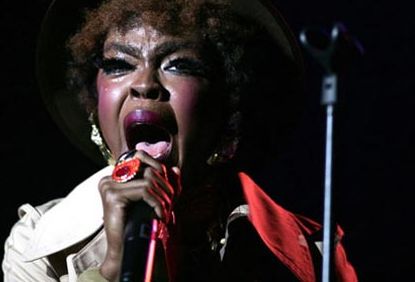
The answers come quick. Wyclef can’t rap. Lauryn was such an immense talent. Praz is….there. Maybe I’m being harsh. Wyclef has some interesting things to say, he just uses so many corny analogies and gets a bit mush mouthed at times. He gets shown up by Praz, who doesn’t rely on accents to the same level. It’s a shame Praz hasn’t done more music since the Fugees breakup. His verses are filled with expert wordplay. He just lacks the charisma of his old cohorts. Then there’s Ms. Hill. So much ability packed into a beautiful package. She could out-rap anyone in the 90’s at her best, and sang with enough passion to do right by Roberta Flack. Unfortunately, she’s apparently a whole big bag of crazy. She sabotaged her own career by running from the industry, releasing odd statements and terrible leaked singles. During the short-lived Fugees reunion she reportedly requested everyone call her Miss or Empress. She’s taken to wearing ridiculous makeup and outfits onstage, regularly getting booed off by her audience for her rambling, often spoken word. performances. It’s like a modern R&B equivalent of Syd Barrett.
The Score is a masterpiece, though. By far the best work of any of the three members discographies, it’s great samples and perfect beats from front to back. Aside from some pointless attempts at the obligatory “rap sketch” there isn’t a wasted moment. There is always a message to be broadcast, always an emotion to transmit to the listener. You can’t exaggerate Hill’s talent. She had the magic that allowed her to not just tell a story, but actually make you live it. "The Mask" is one of those moments. She has a conversation with herself that feels like you walked between to girls on the street. It also has one of the most laidback, jazzy loops on the album. Great rainy day listening. "Fu-Gee-La" is the real showcase. For all the deserved praise of "Killing Me Softly," it’s two tracks earlier that every member of the group gives their very best. Great verses from everyone, a perfect hook and a sublime rhythm track. One of those songs I can hear all day and not get sick of.
In the end, The Score more than lives up to my memories. It’s fantastic from start to finish. The only complaints I have are the aforementioned skits and the questionable cover of "No Woman No Cry." But those are very minor concerns. It’s sad that we won’t hear something like this again. It’s so hard to find this much skill in one group, and with the inability of the Fugees to get passed their egos and disagreements, we can’t look to them to be that rare gem. But at least we’ve got this album to hold on to.
I've said it before and I'll say it again. Rap is one genre that does not age very well. Case in point: LL Cool J's Radio. Upon its release, Radio was a groundbreaking album, well known for its hard hitting beats and storytelling lyricism. It was the first album release on Rick Rubin and Russell Simmons founded Def Jam Records. Listening to it now, I honestly just had a hard time getting through it.
In high school, I owned my fair share of LL albums: Mama Said Knock You Out, Mr. Smith, Phenomenon, and G.O.A.T. Looking back on them now, I don't feel the same way about them as I once did (barring a few select tracks). That is not to say I was every astounded by LL, but I found him relatively enjoyable (besides his constant focus on his lips and abs). (For reference, just press play on the link twice...don't worry about the high or low buttons) The point is I am able to name tracks off those albums that I would listen to at this point in time, even though not one of them would be included in my top 20 favorite rap songs. Unfortunately, Radi0 only provides me with one re-listenable track ("Rock the Bells").
This album is part of the particular group included on "greatest" lists due to their groundbreaking merit, despite their inability to capture modern listeners. It was one of the first rap albums to reach such a high magnitude of record sales. It was a fresh addition to the still newly emerging rap genre. Unfortunately, it just doesn't grab me and I am fairly positive Mike will reciprocate my argument.
No cover this week. Instead, LL Cool J's shining moment. Check out the 7:30 mark.
.d
Look, I love LL. I really don’t think you can find a more genuinely likable guy in rap. So don’t take any of the following complaints as dislike for the artist. I just don’t get this albums place on the list. It’s a good album, and it has historical significance out the ass. But does it really deserve to be higher than the albums we’ve already reviewed? Is this a better rap record than Life After Death? I’m not sure I can answer either of those in the affirmative. Undoubtedly this is one of the most influential pieces of hip hop, being the first to use traditional pop music formats (verse-chorus-verse-chorus)., but I don’t think this is even LL’s best. That would probably be Momma Said Knock You Out (in my opinion a more ambitious record).
Nonetheless, there’s a reason people voted Radio on the list. Right off the bat you get hit with Rick Rubin’s sparse production. Rubin has always been good at creating great music without having one typical sound that defines him. He’s the anti-Lil Jon. You actually have to get four tracks deep before you’ll find an instrument other than drums. The occasional piano of "I Can Give You More" keeps the album from getting to monotonous, and right in the nick of time. The positive side to the bare bones beats is LL’s insane lyrics. The kid was light years ahead of anyone else at the time. "I Can’t Live Without My Radio" is a nonstop assault, tearing apart everything that rap had been before the day Radio was released.
"Dangerous" might be the best boast track ever. This song, above all others here, should be required listening for any prospective mc. The only issue I have with it is that about half the song is just drumbeat with random scratching. That can get a tad boring, but the lyrical play is just too good to knock the song. "I Need A Bea"t was the hit single, which baffles me. Mostly a showoff track for DJ Cut Creator, it doesn’t have much to offer from LL’s standpoint. The constant cutting throws the beat off every stanza, which game me a wicked headache. Maybe it was top level deejaying at the time, but it’s practically prehistoric by today’s standards.
Maybe that’s part of my problem. For what was a groundbreaking album, it now seems to define an era that hasn’t aged all that well. The vocal’s are undeniable. You could put new music to them and half a hit any time you chose. But the production, while top shelf in 1985, has been rendered so obsolete by the advances Rubin himself has been most responsible for. So basically, Rick Rubin is so good at pushing the evolution of hip hop that he has made his older work sound bland. That says a hell of a lot about one man's talent and ability to stay relevant. Unfortunately, LL Cool J hasn’t had the same ability.
If you feel you may need Zoloft, or have recently questioned life’s futility in anyway, do NOT listen to this album. You will be found with a belt around your neck. Things are pretty bleak by Richard Thompson’s view. On the other hand, if you have the strength to listen to this with an open mind, you can find some real beauty. The lyrics seem sad and depressed, but much like Harry Chapin or Leonard Cohen actually are more about a fascination with the art of surviving real life. If you can see what’s pretty about a dirty alley you will enjoy this.
First impressions of the music are interesting. A unique mix of almost American country with British folk. Acoustic guitar backed by pan flute. Blues interrupted by a renaissance quartet. There’s no fear in these arrangements. It’s obvious to say that Thompson had no care for conventions. Yet it never sounds wrong. Somehow it always ties together. "Has He Got a Friend For Me" is a great example. In the beginning it could be mistaken for the Flying Burrito Brothers, then in come the wood flutes. Beautiful song though.
"The End of the Rainbow" is one of the most beautiful melodies I’ve heard. At it’s heart a very simple song it builds itself around a very open arrangement, allowing for lots of space to layer the different instruments. All of which lets the most dismal worldview ever put to song come through the lyrics. This is just the first verse and chorus:
I feel for you, you little horror
Safe at your mother's breast
No lucky break for you around the corner
'Cause your father is a bully
And he thinks that you're a pest
And your sister she's no better than a whore.
Life seems so rosy in the cradle,
But I'll be a friend I'll tell you what's in store
There's nothing at the end of the rainbow.
There's nothing to grow up for anymore
Yup. About sums that up, huh? I’ll wait while you go call a suicide prevention hotline.
Back? ……No?
………uh oh……
In all seriousness, this is quickly becoming my favorite discovery from the list so far. Most the really great albums I was already at least familiar with, but this one was completely new to me. I’d heard covers of one or two of these songs, not knowing the were covers. After a few listenings I’m ready to go on a road trip with this album playing, which for me says a lot. The title track is classic, as is "Withered and Died" (the most country song on here). I can’t delve too deeply into breaking each song down, as I don’t want to lessen the impact for anyone, but I need to add that Linda‘s voice is a perfect match. At times soft, at others strong, her sense of underplayed drama just adds to the creeping allure of the music. This is by far the most emotional music for me that we have reviewed, and I can’t recommend it highly enough. Especially for you cynics out there.
-the fat man
Once in awhile an album comes along that has been around for years and makes you re-evaluate your musical tastes. I Want to See the Bright Lights tonight is one of those albums for me. The minute I heard "The Calvary Cross" I got chills. Yep, that good. And just when I thought it couldn't get any better, the album included a live version of the song. Blew me away. I listen to it daily.
This album just does everything right and is extremely accessible, despite being a folk album. By which I mean, some folk albums get you weird looks from passengers in your car when they come on. This one, on the other hand, received this reaction: "Man, this song sounds fuckin' awesome. Who is this?"
From "When I Get to the Border" to the closing lines of "The Great Valerio," this album is an example of songwriting and musical composition done right. The album perfectly blends both Richard and Linda Thompson and allows them the ability to showcase their talents. Both artists are granted the right to show off their vocal pipes and rightfully so. While Richard provides the traditional male folk singer feel to the album, Linda offers us soulful ballads reminiscent of a Emmylou Harris type of female vocalist. Her voice is so effective that the listener disregards the lyrics which border on the verge of pitiful, especially on the track "Has He Got a Friend for Me." With such a vast array of themes and subjects, the album could have definitely appeared scattered and haphazard. Instead, tracks such as "The Great Valerio," "Border," "The Calvary Cross," and the title track fuse to create something unique and wonderful.
I can't say enough about this album. I just read Mike's review and laughed because he shares my exact sentiments on this disc. By far, my favorite discovery and the exact reason we decided to undergo this epic (and often times, impossible) feat.
Switched it up this time around......M. Ward and Zooey cover.